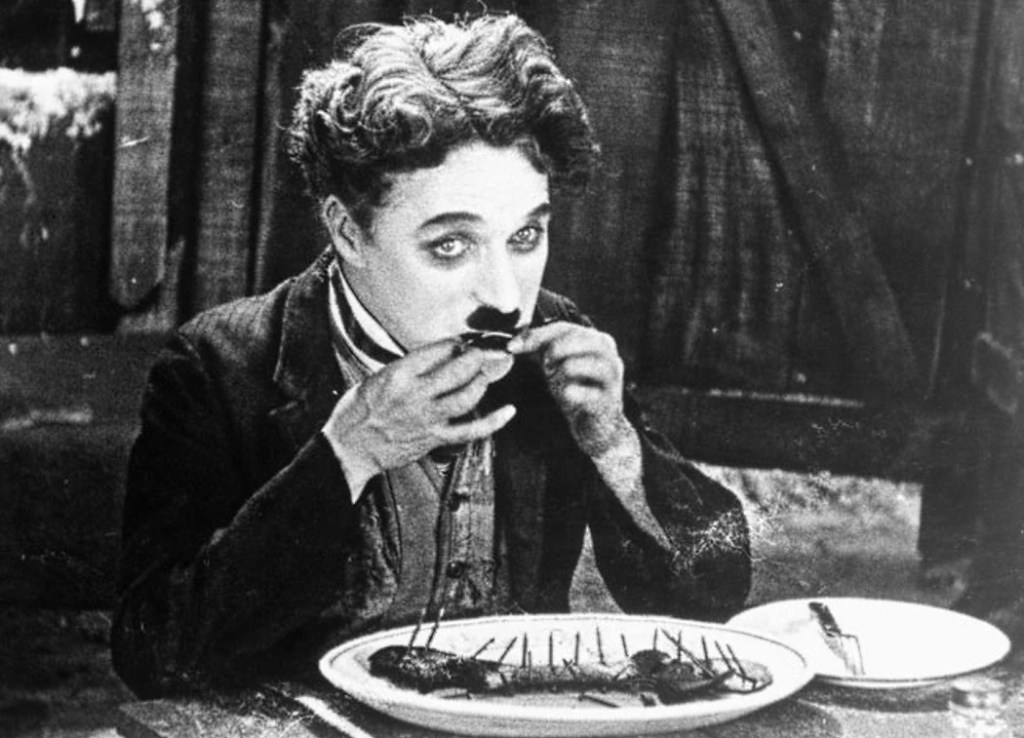
Super Tramp: The Enduring Legacy of Charlie Chaplin
Imagine a nightmare scenario: All the 1920s films of Lloyd, Keaton, and Chaplin are unknown, the negatives and prints lost and unrecoverable (an evil fate that actually befell most of the ‘20s films of comedian Lloyd Hamilton). With that single decade missing, Harold Lloyd would be considered a minor figure, who showed real promise in his comedies of the late teens, after he stopped imitating Chaplin as Willie Work and Lonesome Luke and began appearing as the “glasses” character. He would also be admired for his two first-rate sound features of the early 1930s, Feet First and Movie Crazy, made with writer/director Clyde Bruckman. But after that, Lloyd’s career faltered and he retired before the end of the decade – and then made a failed comeback attempt in 1946 with Preston Sturges’ The Sin of Harold Diddlebock. The eclipse of Buster Keaton would be even more extreme without his 1920s comedies, reducing him to a footnote in film history: a talented second banana to Roscoe Arbuckle in the late teens, and the uncomfortable star of some early MGM talkies, who wound up in hit-and-miss two-reelers at Educational and Columbia in the 1930s and ‘40s.
Charles Chaplin, even without such 1920s classics as The Kid, The Idle Class, The Gold Rush, and The Circus, would still be seen as a genius, thanks to his brilliant work during the teens at Keystone (The Rounders, The Masquerader), Essanay (The Tramp, The Bank), Mutual (One A.M., Easy Street, The Immigrant), and First National (Shoulder Arms), and his two classic features of the 1930s, City Lights and Modern Times – Chaplin’s funniest, most touching, and most profound achievements in silent comedy. When he did turn to sound in the 1940s, Chaplin was able to reinvent himself with two courageous and very funny films, The Great Dictator and Monsieur Verdoux. Neither comedy offers even a whiff of the has-been, a miasma that sadly clings to the later works of Lloyd and Keaton. Indeed, Chaplin was able to look the has-been fate squarely in the eye with his exquisite comedy/drama Limelight (1952) – and follow it with a scathing satire of American Cold War paranoia, A King in New York (1957). Releasing major works in the 1950s, Chaplin joins a select group of filmmakers who were gifted and productive and lucky enough to create masterpieces over five decades.
Where Chaplin stands alone is in the unprecedented impact of his work, which remains without equal in the history of cinema. By the late teens he was one of the most well known and beloved performers on the planet, and that fame has never receded: A photograph of the Little Tramp is still recognizable virtually everywhere in the world, more than 100 years after Chaplin first stepped in front of a camera. NO ONE ELSE from the silent era, however widely revered they may have been in their day, has maintained such an indelible profile. Chaplin has become an icon not of silent comedy but of all comedy; not of Hollywood but of all filmmaking. Indeed, the Little Tramp has become an enduring symbol of humanity itself: human enough to be hungry, destitute, and rejected, yet sublime enough to aspire and dream and not give up.
This worldwide embrace of Chaplin’s films, along with their continuous availability, has caused certain of today’s sophisticates to hold him in lower esteem than Keaton and Lloyd, both of whom were rediscovered in the 1960s and ‘70s after years of neglect. Not surprisingly, the (relative) newness of those comedians made them seem even more fresh and original to the film buffs who were raised on Chaplin and had come to take his mastery for granted. Moreover, in this anti-romantic age, Chaplin’s use of pathos has been regarded with disdain in some circles. But for those whose sensibilities are not limited by changing trends in taste, Chaplin’s work becomes even more special and important: deeply moving when virtually everyone else considered slapstick and heartbreak to be oil and water; politically provocative when almost no one in American film was alluding to communism or fascism; uncompromising and successful when the other major comedians – Keaton, Lloyd, Arbuckle, Mabel Normand, Harry Langdon, W.C. Fields, Mae West, Laurel & Hardy, the Marx Brothers – were being frustrated by outside control and interference. Chaplin’s films remain the flat-out funniest and most universal body of work in cinema, delighting international audiences of all ages for over a century. Only Charles Chaplin can justly be regarded as the greatest comedian – and actor and filmmaker – of them all.
(This essay first appeared on fandor.com in November of 2011. Special thanks to Kevin B. Lee for all his help!)
Link to:
Film: Essays: Contents
For more on Charlie Chaplin, see:
More Cool Sites To Visit! – Film
For more on Buster Keaton, see:
Film Review: San Francisco Silent Film Festival 2023
For more on Buster Keaton and Harold Lloyd, see:
Film Essay: Clyde Bruckman
For more on Harold Lloyd, see:
Film Review: San Francisco Silent Film Festival 2024
 NICOLE V. GAGNÉ