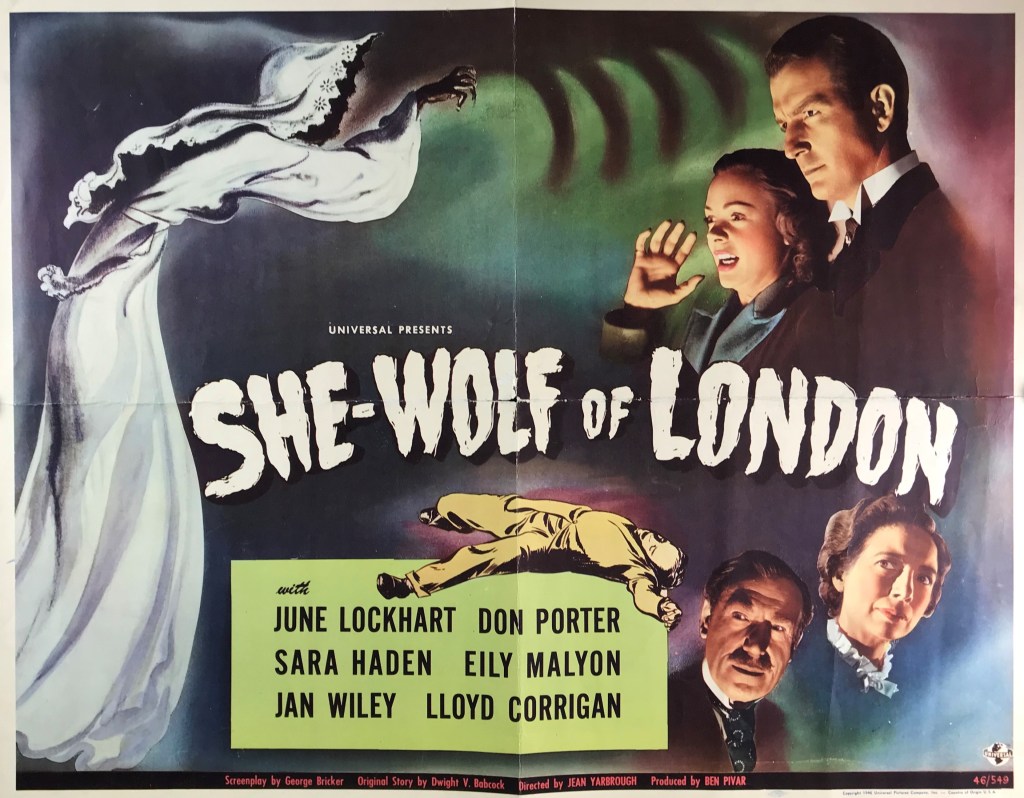
Recently I was gifted with the Universal Classic Monsters DVD box: Thirty horror films from the 1930s, ‘40s, and ‘50s, impeccably transferred onto twenty discs. All the Universal films featuring the Frankenstein Monster, Dracula, the Wolf Man, the Mummy, the Invisible Man, and the Creature from the Black Lagoon are there, along with the ‘40s remake of the Phantom of the Opera (the only color film in the series). There are even Universal’s Abbott & Costello horror send-ups, Bud and Lou colliding with Frankenstein, Dracula, Wolf Man, Mummy, and Invisible Man. Extra goodies include numerous bonus documentaries, trailers, and commentaries.
The initial takeaways are:
1. The Universal monster films are even better than I remembered – indelible superimpositions of sex and death, which continue to resonate almost a century after some of them were made.
2. The iconic actors in these films are unique and irreplaceable. Time has only enhanced the screen presence of Boris Karloff, Bela Lugosi, Lon Chaney Jr., and Claude Rains, who star in multiple films in this collection. There are also single appearances of equally stellar players: Vincent Price, Peter Lorre, Elsa Lanchester, John Barrymore. And the films boast a galaxy of unforgettable supporting performers: John Carradine, Lionel Atwill, George Zucco, Dwight Frye, Edward Van Sloan, Colin Clive, Cedric Hardwicke, Una O’Connor, Maria Ouspenskaya, Glenn Strange, Evelyn Ankers, Basil Rathbone, Gale Sondergaard, J. Carrol Naish, Henry Hull, Ernest Thesiger. Thanks to them, you can’t take your eyes off the screen for a moment!
3. A constellation of great talents also worked behind the cameras on these films. They include not only such acknowledged master directors as James Whale and Tod Browning, but also Karl Freund (most well known as a cinematographer, from Fritz Lang’s Metropolis to John Huston’s Key Largo), and sturdy pros such as Erle C. Kenton and Robert Siodmak. The latter’s brother Curt Siodmak is a recurring and welcome presence as a writer in this collection. And then there are special-effects wizard John P. Fulton, make-up genius Jack Pierce, legendary composer Franz Waxman…
But perhaps the biggest and most welcome surprise is Universal’s penchant for featuring women in these films, not just as distressed damsels (although there are plenty of those), but also as makers of distress in distaff scare fare: Bride of Frankenstein, Dracula’s Daughter, The Invisible Woman, She-Wolf of London.
That last title is a much-maligned – if remembered at all – B production from Universal, just over an hour long, filmed in two weeks in December of 1945 and released the following April. The antipathy accorded it in both contemporary reviews and later assessments is rooted in the resentment generated by all bait-and-switch enterprises: Although positioning itself as a horror film, She-Wolf of London is in fact a mystery, a whodunit, insofar as (spoiler alert!) there is no actual werewolf, only a faceless female killer who is trying to make people think a lycanthrope is on the loose. Further encouraging the film’s dismissal is the fact that its two leads are too familiar from their 1960s careers on television: June Lockhart, forever the beloved mother figure from “Lassie,” “Lost in Space,” and “Petticoat Junction,” and Don Porter, perennially paternal as Ann Sothern’s sitcom boss and Gidget’s widowed father.
The behind-the-camera talent likewise fails to increase She-Wolf of London’s reputation. The film was scripted by George Bricker, a writer at home in mysteries both dramatic (Love Is on the Air, Mr. Moto in Danger Island) and comedic (Sh! The Octopus, The Corpse Came C.O.D.). He also wrote numerous films that focused on women, including Broadway Hostess, The Widow from Monte Carlo, They Made Her a Spy, Women in the Wind, The Blonde from Singapore, Frisco Lil, and two of the “Torchy Blaine” mysteries, Torchy Blaine in Panama and Torchy Blaine in Chinatown. She-Wolf of London was Bricker’s fourth and final collaboration with veteran director Jean Yarbrough, after The Devil Bat, Lure of the Islands, and House of Horrors. Yarbrough also helmed several features for Abbott & Costello and the Bowery Boys.
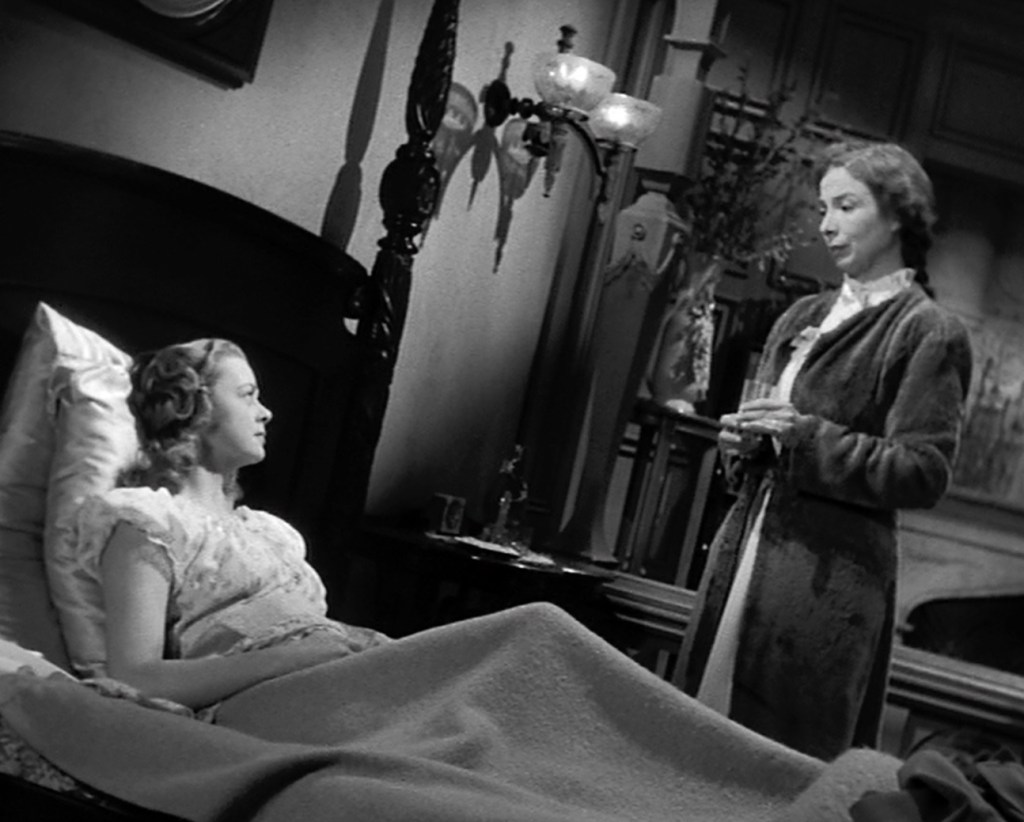
Yet She-Wolf of London is deserving of further consideration, due to its focus on the women in its cast. Lockhart plays Phyllis Allenby, engaged to Porter’s Barry Lanfield but now resisting marriage, fearful that she has succumbed to the Allenby Curse and is transforming into a murderous werewolf that has been prowling a nearby park at night. Her cousin Carol Winthrop (Jan Wiley) tries to allay Phyllis’ fears, even as her own love life is being interfered with by her mother Martha (Sara Haden). Manager of Allenby Mansion, Martha also seeks to manage her niece Phyllis as well as Carol. The fourth female character is housekeeper Hannah (Eily Malyon), an indispensable domestic who proves herself a loyal friend to both Phyllis and Carol.
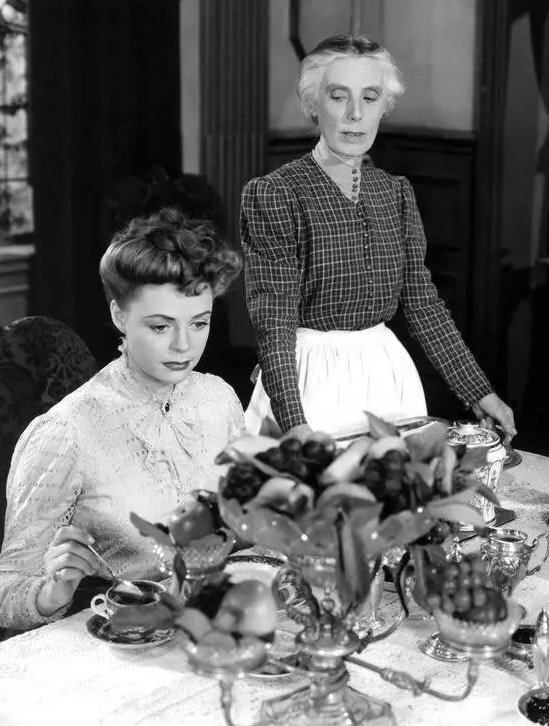
The four women are the sole occupants of Allenby Mansion, and the film’s mystery revolves around them. Is Phyllis in fact a cursed werewolf, or is she being drugged and deluded? The suspense soon boils down to whether the real killer is Carol or Martha. Intensifying the film’s feminist perspective is the fact that all the men are consistently ineffectual, whether they are the film’s love interests – Phyllis’ fiancé Barry, played by Porter; Carol’s forbidden beau Dwight Severn, played by Martin Kosleck (Hollywood’s go-to Nazi heavy in a slew of wartime dramas) – or the dogged policemen Inspector Pierce (Dennis Hoey, who played Inspector Lestrade in Universal’s Sherlock Holmes series) and Detective Latham (Lloyd Corrigan, a reliable character actor who also had a successful career in ‘60s television). These men may be well intentioned, but none of them are capable of rescuing anyone or catching the killer and solving the mystery. Those jobs are accomplished by the intrepid Hannah when she confronts a knife-wielding Martha at the film’s climax.
Hannah foils Martha’s efforts to drive Phyllis insane and take over Allenby Mansion. Trying to kill Hannah, Martha tumbles down a flight of stairs and is impaled on her own knife. Phyllis and Carol are then both free to marry their men; Hannah presumably resumes handling the cooking and laundry at Allenby Mansion.
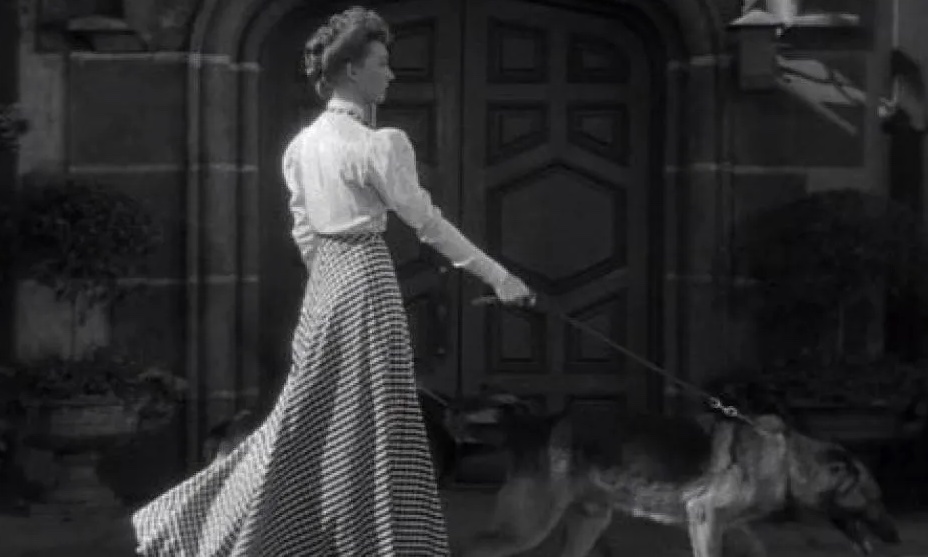
None of Lockhart’s three female costars ever achieved a fame equal to hers. After a decade toiling in mostly uncredited appearances, Jan Wiley left films at age 30 in 1946. Eily Malyon, then in her late sixties, ended her film career just two years later, after almost two decades of uncredited roles. Sara Haden is today best remembered playing Aunt Milly in M-G-M’s Andy Hardy series. Yet the four women mesh together well, each one digging deep into a substantial role that showcases her talent. She-Wolf of London represents a high point for all four of these underrated actresses, and a significant milestone in the evolution of feminist drama in American film.
Link to:
Film: Essays: Contents
 NICOLE V. GAGNÉ