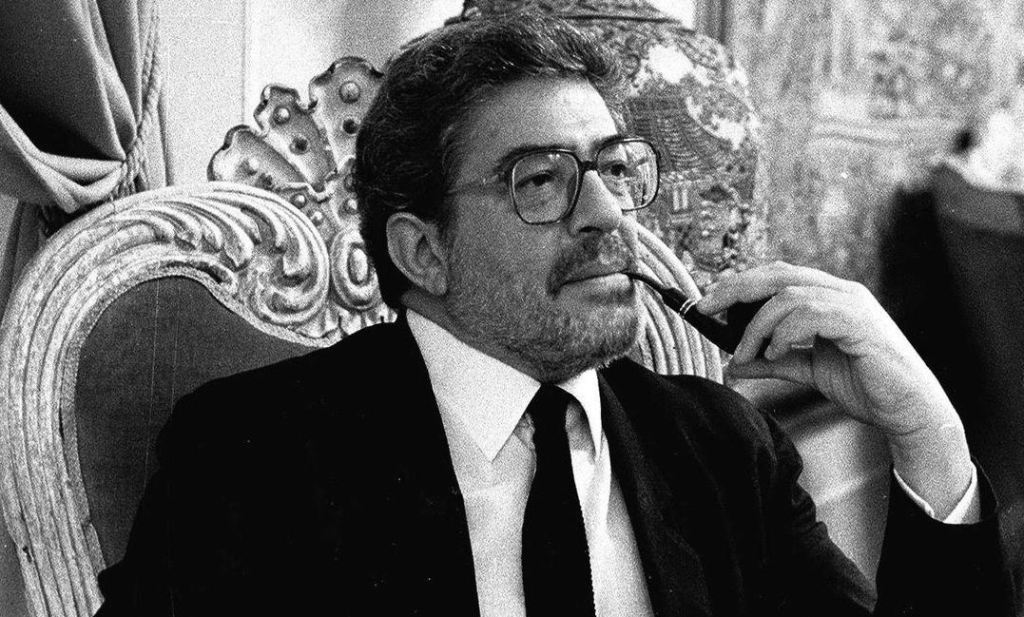
Ettore Scola’s Le Bal Blends Ballroom Dancing and History
The steady growth of Ettore Scola’s reputation in America is a cause for celebration among devotees of Italian cinema. In the last 20 years, he has produced a body of work which has placed him among the most original and exciting of contemporary filmmakers.
Scola came up through the ranks in the Italian film industry, from anonymous gag man to credited script writer and finally to director. He first received significant American recognition in 1970 with The Pizza Triangle, and that film remains an excellent introduction to his talents: a plastic treatment of time and space, counterbalanced by a true neorealist’s attention to the actual living conditions of society’s marginals; an uproarious comic sensibility that serves to dissect the interrelationship of sexual and social politics; a penchant for grotesquerie which paradoxically taps into the humanity and realism of his characters. These qualities inform the string of major films which followed: We All Loved Each Other So Much, A Special Day, Passione d’Amore, La Nuit de Varennes, and the film that is arguably Scola’s masterpiece, Down and Dirty – a look into the debased existence of a family of Roman slum dwellers, which is perhaps the funniest horror movie and the most surrealistic documentary ever made. Several of these films also combine Scola’s fascination with history, of nations as well as of cinema. This twin obsession highlights his latest film, Le Bal, in which five decades of French history are examined through the various generations glimpsed in a dance hall.
The Film Journal spoke with the cordial 53-year-old director during his brief stay in New York. (Special thanks to Stefano Corti for assisting in the translation of certain questions.)
Q: What attracted you to the play from which you adapted Le Bal?
SCOLA: Some French friends, including Jack Lang, the French Minister of Culture, told me to go see the show, saying, “It’s like one of your films; it doesn’t seem French.” So I went to see it, and it was pretty unusual for the French. They have a special respect for their history and myths, while we Italians, first with neorealism and then with Italian comedy, have fought against certain myths and taboos. We’ve tried to understand the individual from close up. Zavattini used to say that you had to tail man, and this tailing is more characteristic of Italian cinema than French. But the play had this view of their history which was without illusions, an attentive look at the “little” man of the street. I don’t ever make films about privileged people; I wouldn’t know how to make a film about a rich, handsome, happy man. I prefer people like the homosexual in A Special Day, the slum dwellers in Down and Dirty, or the very ugly woman in Passione d’Amore. In Le Bal they’re all little people, not particularly favored by life physically, socially, or economically. Also, the play took place in the same setting, without ever going outside, something I had already done in A Special Day and The Terrace. And then there was its peculiar way of dealing with history, without seeing the official history. In A Special Day, you don’t see Hitler and Mussolini; you see two little people who are subjected to this history, subjected to fascism. The same thing happened in La Nuit de Varennes, where you never see the fugitive king. What interests us there are the reflections of this historical event on the people who were living during that moment. The same thing was going on in this play; European history passed by, but only an echo of this history arrived into the dance hall. These elements were similar to my own cinema, and so I thought to make a film based on this show.
Q: Are there big differences between the play and your film?
SCOLA: The film has time periods that didn’t exist in the show, which had just the dance hall today, then the American liberation and the Algerian War. And even those things I changed a lot. Furio Scarpelli, Ruggero Maccari and I spent five months redoing the scenario and inventing everything. I also added four characters: the three Italians – the owner who gets old along with the dance hall, the girl who never is asked to dance, and the bathroom attendant – and the man who’s the reincarnation of the Jean Gabin myth, of that fateful man.
Q: The show was originally without dialogue?
SCOLA: I kept that element from the show. The film is a little like when you go to a dance hall not to dance but to observe those who dance. When you go, it isn’t like you hear what they say to each other. But you’re curious to understand them, to figure them out, to figure out what they’re saying to each other, if a story is being born between a couple, if they’ll go together, if they’ll be alone, if they like each other. The film has a little of this point of view. Also, there’s no occasion for dialogue because these are people who, outside the dance hall, have pretty miserable lives; you intuit jobs and family lives that are pretty modest. The words we use have not particularly favored them, and so they are in search of a new type of language, a communication that passes not through words but through intentions, thoughts, and feelings.
Q: You seem to regard the generation of the 1980s more pessimistically than that of the 1930s.
SCOLA: It’s not pessimistic. To the contrary, I think I’m an optimist and that the film is optimistic because it shows the part of man’s nature that can rise in the face of all of history’s calamities. Man’s nature can rise in opposition. He can stand up for his right to be happy, his right to love. History can’t change man. In spite of wars, concentration camps, Nazi occupations, nuclear wars, the nature of man remains pretty similar. Man will always continue to have the same hopes, the same desires to communicate, to find a twin spirit, to be with others, to have fun, to dance, to love, to live.
In the past, yes, there have been moments of greater joy, greater collectivism. So in Le Bal there are two or three moments of collective aggregation, such as when everybody protests the fascist who stopped the music by dancing in unison without music. Or the moment of collective joy during the liberation and the arrival of the Americans. Or when they punish the collaborationist and send him away, or in ’68. It’s to remind us that, in every moment of popular, collective sentiment, man was better off. Therefore, we have a duty to find it again now, because we always have occasions for struggle. In this moment there’s the struggle for peace, the struggle against the missiles that are being put in Europe. The peace marches are something strong, present, where hundreds of thousands of people get together to protest the threat of these missiles. That’s a collective moment that we have to find again, because these are the best moments of the history of humanity. So if the characters of the ‘80s seem a little sadder than those of ’36, it’s precisely because they haven’t found this moment of ideal communion.
Moreover, in my opinion, every time people try to imitate something, they lose some dignity. Like when they try to imitate the American boogie-woogie, or Fred Astaire and Ginger Rogers – we began imitating them after the war – or South American models. In the last scene you see people of another generation, 40- and 50-year-olds, who shouldn’t be dancing to disco music. They’re awkward and do it poorly because it doesn’t belong to their generation or their culture. As so often happens to people who imitate, they’re not natural and therefore are sad.
Q: The film has very distinct breaks between eras, but the transition from 1968 to the present is handled very subtly.
SCOLA: In ’68 there was this eruption of new ideas, new hopes, new questions: this window that was suddenly broken, this entry into history of new social subjects, which brought so much hope, so many requests to bring imagination to power. And instead, everything was very quickly reabsorbed into the system. No imagination came into power. The same old people returned to power, the lights went on again, the foolish dance began again, and that moment of hope was quickly suffocated. There was an absorbing, like those plants that eat insects that come to rest upon them, that defend themselves by eating. There wasn’t a fracture, it wasn’t a break. ’68 was a period that was reabsorbed, but which nevertheless did pose new questions. I don’t think it’s a closed chapter. I don’t think it’s an era that’s been trapped within its own limits. It was reabsorbed but I think the seeds continue.
Q: So you aren’t pessimistic about the future.
SCOLA: No, because I have a faith in the nature of man, which continues intact and strong.
(This interview, co-authored with Frank de Falco, first appeared in The Film Journal, May 1984.)
Link to:
Film: Interviews: Contents
For more on Ettore Scola, see:
Film Review: Le Bal
 NICOLE V. GAGNÉ