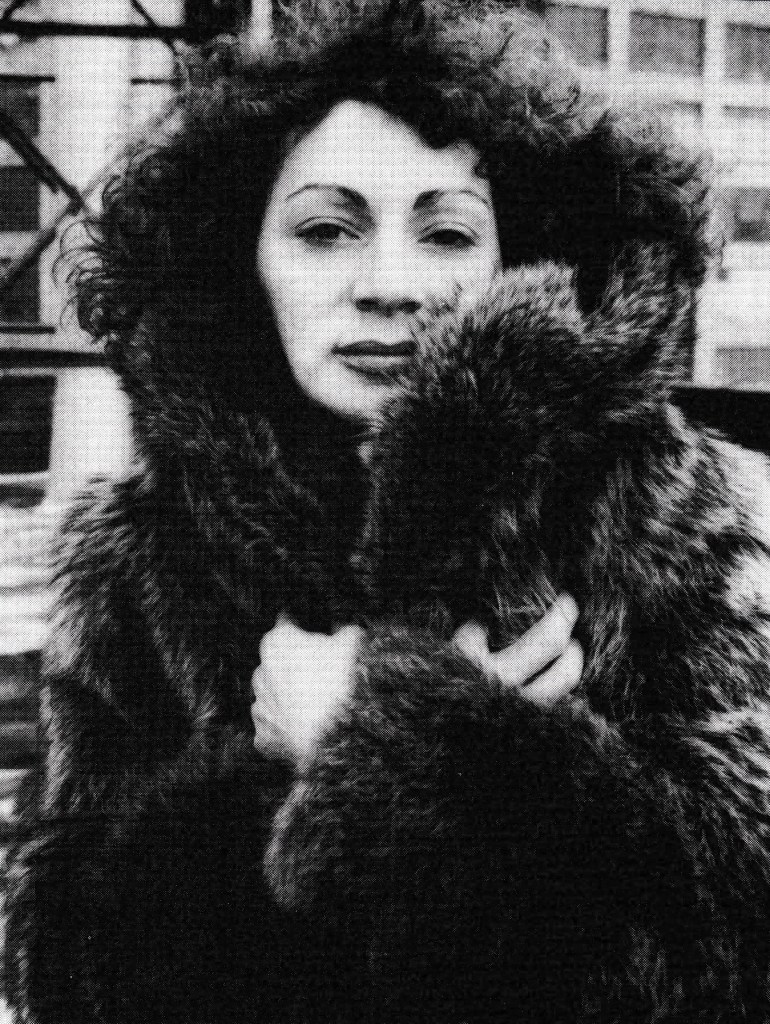
Unbroken Goddess: Holly Woodlawn
One of the indelible performances in ’70s American film is Holly Woodlawn’s screen debut in Paul Morrissey’s Trash (1970). Whether she’s scrounging furniture from garbage dumps, boys from street corners, drugs from her neighbors, or affection from the junk-softened Joe Dallesandro, Holly is unforgettable – hilarious, indomitable, bigger than life. A fallen angel struggling to survive in the lowest of lower depths, she’s at once glamorous and sleazy, streetwise and naïve, beaten and beatific.
Both Holly and Joe were playing variations of themselves for Morrissey, but the real Holly underneath Trash’s Holly is itself a construction: the life-altering vision of one Harold Ajzenberg. His road from boyhood in Puerto Rico to life as a screen goddess for Andy Warhol is described in Holly Woodlawn’s autobiography A Low Life in High Heels (St. Martin’s Press/Harper Perennial, 1991). Holly’s story is as funny and fascinating as any performance she ever gave – a weird amalgam of Last Exit to Brooklyn and Auntie Mame. Besides the first-hand accounts of Warhol, Morrissey, Candy Darling, Jackie Curtis, Joe Dallesandro, Andrea Feldman, and other Factory notables, the book offers fascinating glimpses of a range of celebrities, including Federico Fellini, Divine, Yoko Ono and John Lennon, Rudolf Nureyev, Ethel Merman, Rock Hudson, Gala Dalí, Jim Morrison, International Chrysis, Robert De Niro, and Bette Davis.
I interviewed Holly Woodlawn by telephone at her Los Angeles home. And the only thing cooler than getting to talk to her was finding out that she is every bit as delightful and unpretentious in real life as she is on screen or in her book.
Q: Whose idea was the book?
WOODLAWN: Actually, it was my agent and Jeffrey Copeland. I had started a book several years ago but it didn’t come through. It was more of a picture book.
Q: That would have been terrific.
WOODLAWN: I know! We were using photographs from a friend of mine, who had photographed me over a ten-year period.
Q: Was that Jarry Lang? A lot of his pictures are in your book.
WOODLAWN: No – it should have been, though! It was Frank Kollegy. Jarry had passed away by that time. And I was very untogether in that period of my life, honey.
Q: This was the late ’80s?
WOODLAWN: Yes, just before I escaped New York and came to L.A.
Q: Was it really an escape? Was it important for you to get away from New York?
WOODLAWN: Very.
Q: In what sense?
WOODLAWN: It saved my life! I really hit rock bottom, honey.
Q: The scene had changed so much since the ’70s. It must have been a lot harder to get a gig.
WOODLAWN: Not only that – everybody was gone. And Andy just died, so like that’s when I figured it was the end of the era. I was so depressed, and I was doing NAUGHTY THINGS! A friend of mine was living here and said, “Come to L.A., honey, at least you’ll get some sun.” So I bought a one-way ticket.
Q: And it’s really worked out for you? You like it there?
WOODLAWN: I love it, I love it. I went to a party and that’s where I met Jeffrey Copeland. And we started a friendship. He was a screenwriter; that’s what he wanted to be. He was submitting his stuff to this agency and he told the agent he knew Holly Woodlawn. So the agent said, “What’s she doing? Is she writing a book about the years with Warhol or what?” So Jeffrey said he would speak to me. At that time I had moved back to Florida with my parents, to get my head together. Jeffrey said, “I have an agent that wants you to write this book.” The agent had suggested I get a ghost writer, and so I thought, well, I like Jeffrey’s sense of humor – sort of on the dark side, darling! Very cuckoo. Well honey, wouldn’t you want him to help me write the book? So I moved back here and got a little job in this little curio store called Wacko, which sold cards, and we started. We did the proposal and sent it off to everybody, including St. Martin’s.
Q: And when you got the green light from them, you went ahead with the manuscript?
WOODLAWN: Yeah. Jeffrey bought a computer, and we moved in next door to each other. God, trying to remember the past was so hard!
Q: Was the manuscript basically taped conversations with you, which he transcribed and edited?
WOODLAWN: Yes and no. We tried everything. The best thing that worked was just me coming in, and we would have like, you know, hour or two-hour sessions, and we would just start talking, have a glass of wine – but we had to dump the wine, you know, because I couldn’t remember anything. I would remember like little spurts at different times of day, and so I would just knock on the wall and say, “Oh I just remembered something!” And then little by little the pieces fit together and we typed this whole story.
Q: Your voice really comes through in the book. It’s like you’re telling everything directly to the reader.
WOODLAWN: Well, first of all, Jeffrey’s a good man, honey! When he wrote something, I’d go back and say, “Well, I wouldn’t say it this way, I’d say it this way.” Then at one point I would read things and I didn’t know whether it was him or me. That’s when we knew.
Q: Was there any problem with St. Martin’s balking at any material that was in the manuscript?
WOODLAWN: A few things, but mainly it’s pretty much there – there’s a few chapters with things that weren’t necessary.
Q: But they weren’t trying to keep out things because they were afraid of lawsuits or anything like that?
WOODLAWN: Oh no. I didn’t want it to be a dishy book; I didn’t want to bring anyone down with me. And I thought what I did was funny enough, you know? I thought it was good enough.
Q: One chapter describes how harrowing it was when you first came out to your parents while still a kid in Miami – you ran away from home very soon after that. But it’s really neat to see that your book is also dedicated to your folks.
WOODLAWN: They’re my best friends.
Q: And they’ve read the book?
WOODLAWN: Oh yeah. They loved it.
Q: You write about how, when you were on the road headed for New York City, you were standing next to a Coke machine in a thunderstorm and got struck by lightning. Now, I can believe that, because a lot of people are struck by lightning. But did you really pull off your braces with a pair of tweezers?
WOODLAWN: Yes!
Q: That’s incredible, how did you do that?
WOODLAWN: You know, you’re the only person who ever asked me that!
Q: Were there a lot of them on individual teeth?
WOODLAWN: I had the whole set, honey! And it wasn’t platinum either! I was in a bus stop and had these tweezers. I don’t know how I got them off – that cement, and the wire that went around – but I did it.
Q: Was that for you one of the last breaks from your old life in Miami, yanking off those braces?
WOODLAWN: Yeah, because once I did that, there was no going back.
Q: In your book you also describe how shortly after that, you first shaved your legs and plucked your eyebrows.
WOODLAWN: In the motel, yeah. In Gee-oh-gia, honey!
Q: To have then gone on hitchhiking through the South after that – it’s amazing you weren’t bashed.
WOODLAWN: We were very lucky. First of all, I was with my friend Russell, who was the loudest – I think it was more fear on their part, because he was LOUD. I mean, he had eyebrows that went right up to his forehead, his hairline, and long nails, and he was very tall and skinny, a very thin face. I don’t know how we did it.
Q: Is it also possible that this was a somewhat more naïve time, and some of the people never actually realized what you two were really about?
WOODLAWN: I think so. Plus, at that time, I was very, very shy and very quiet. So it wasn’t like two insane maniacs. And we really in a way tried to be as quiet as possible.
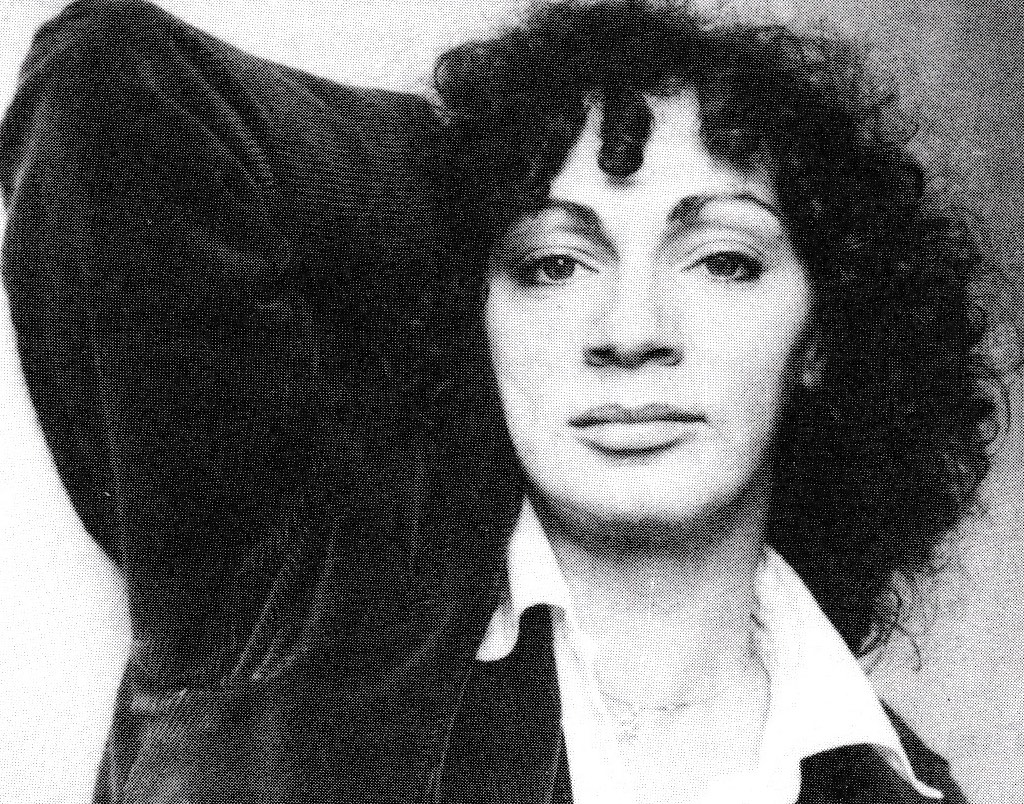
Q: When you write about going to the Stonewall in New York during the height of the riots back in ’69, you describe an encounter you had with Marsha P. Johnson.
WOODLAWN: Miss Marsha, yes!
Q: You’ve heard what happened to her. [Marsha P. Johnson, a Black drag queen who hustled on New York’s Lower West Side, was found dead in the Hudson River in the summer of 1992.]
WOODLAWN: Yes.
Q: Apparently, the police are currently investigating a jailhouse confession to her murder.
WOODLAWN: Really?
Q: Yes. And it’s so ironic, because in your book you say, “I’m surprised they didn’t erect a statue of Miss Marsha on top of Sheridan’s shoulders.” Now a petition is being circulated to have a memorial flagpole erected for her.
WOODLAWN: Oh that would be so wonderful.
Q: People kept after the cops, organizing marches and protests, until they changed their classification of Marsha’s death. They had said that it was a suicide, which was bullshit.
WOODLAWN: Right. And you know, what all these gay guys forget, after all these years, is that, honey, it was the drag queens that started that fucking Stonewall riot.
Q: That’s one of the good things about your book, how it reminds people about who was on the front lines.
WOODLAWN: Exactly. And they should take Sheridan down and put Marsha up there!
Q: It’s very frustrating that your only film currently available on videotape is Trash.
WOODLAWN: I know. We’ve been trying to work on getting Women in Revolt, but the people at the Warhol Foundation said that one of the reels is missing or got screwed up.
Q: That’s so ridiculous.
WOODLAWN: And it’s the only movie with the three of us.
Q: Everyone’s always quoting the Lou Reed song, “Walk on the Wild Side” – the lines about you are even included in your book. But Reed himself is barely mentioned. Were you at all friends with him? He wrote a song about you and Jackie Curtis and Candy Darling, but did he know you?
WOODLAWN: No, not really. I didn’t even meet him util after the song – a while after the song. I don’t know when he actually left Nico and those people. I think it was around ’67. Then he came in. I know Candy was there a little longer, and then she brought Jackie in.
Q: You mention in the book that it was Candy and you who first got Jackie into drag one Halloween.
WOODLAWN: Yes! And then you couldn’t get her out of a dress.
Q: You imply in the book that she did drag more to advance her career and make a name for herself then because of her own inner feelings about her gender.
WOODLAWN: Oh yeah. And then she found out that men loved “women” in dresses! And that it was more fun, and people paid more attention.
Q: Whereas Candy lived as a woman pretty much full time once she got started.
WOODLAWN: Candy was a woman, basically.
Q: As opposed to you or Jackie, she didn’t really have times in her life when she went back to living as a man.
WOODLAWN: No. And I was living as a woman completely, through all of this, until… When did I stop?
Q: You write about going back to Florida and living as a man – and working at Benihana! – in the early 1980s, when you were in your mid-thirties. It must have been boring.
WOODLAWN: Hideously!
Q: Did you have to relearn to do things that you’d gotten out of the habit of doing?
WOODLAWN: Completely. I even tried lifting weights. But then I thought, this is absurd – it’s not me.
Q: It’s astounding to think that you just walked in off the street and played that part in Trash. It’s such a rich and funny performance, and you’re so natural and at ease in front of the camera.
WOODLAWN: Oh thanks.
Q: Johnny, your boyfriend at the time, plays a high school kid that you pick up, and he also does a wonderful job. But he wasn’t an actor either.
WOODLAWN: No, not at all. That astounded me more than anything else.
Q: Was his scene done in one take, or did you have to shoot it with him several times.
WOODLAWN: Less than me, honey – I had to do that scene with the pillow three or four times.
Q: Well, getting a prop pillow to drop from underneath your sweater on cue has to be tricky. Did the acting bug bite him after that?
WOODLAWN: Nah, he wasn’t interested. He was just having fun. That’s probably why he was so good. He was basically playing himself. He had come here for the Woodstock thing, and then he was going back to Georgia where he came from. But then one night I met him and said, “This child is not going anywhere!”
Q: I love how Trash takes all the bourgeoisie’s big fears – drugs, welfare cheats, hustling – and not only makes them funny, but also makes the audience care about the people they’re supposed to be afraid of. That can go a long way to eliminating those fears.
WOODLAWN: Yeah. Morrissey was real smart.
Q: He never actually gave people a script with lines, did he? It was mostly improvised?
WOODLAWN: It was him and Jed Johnson, just the two of them.
Q: I love how the film makes fun of bleeding-heart liberals, with Michael Sklar as the man from the welfare department. He had that character down perfectly.
WOODLAWN: I was watching it yesterday, because I just got an agent and so I was doing a compilation tape of all the stuff I was in. And I put in that scene with the welfare worker where he says, “I’ve worked with the blacks who crank out those babies!”
Q: What really makes that scene is the way he flips for your shoes and tries to get them from you. Was that Morrissey, or did Sklar come up with it?
WOODLAWN: It was Morrissey’s idea.
Q: Is it true that you were in a film called Is There Sex After Death?
WOODLAWN: Yes.
Q: I haven’t been able to find that one on videotape.
WOODLAWN: I think we saw it on videotape here.
Q: You don’t mention that credit in the book. Was there a reason you wanted to skip that?
WOODLAWN: Yeah, because it was a lousy movie! It was just an interview, basically – like what I did in Superstar. I was in front of a vanity table talking about… I don’t even remember what I was talking about!
Q: Wasn’t Buck Henry involved in that film?
WOODLAWN: You know what, I don’t even remember. The person who produced it was interviewing me. They had rented a room at the Chelsea, which was supposed to be my home. And at that time, I wasn’t even living there. I remember at one point I had a beer in one of the drawers, and I took out the beer and took a glug and put it back in. And they were asking me questions.
Q: Is that the same situation as your appearance in the Quentin Crisp documentary Resident Alien?
WOODLAWN: Oh ho ho… Well, that was the time I was telling you about, when I had to escape. That was about a month before I left!
Q: So they caught you at a low point then.
WOODLAWN: Oh honey. Very low! I was doing cocaine – I was a mess.
Q: I saw Scarecrow in a Garden of Cucumbers in the movies several years ago, but that one also –
WOODLAWN: – is not on video either.
Q: What’s holding it up?
WOODLAWN: That’s another thing we’re trying to track down. We can’t find anybody that was involved, the director or anybody.
Q: That’s awful.
WOODLAWN: I know! It’s such a cute movie, and Bette Midler’s in it, and Lily Tomlin, and there’s a great incredible song from Tally Brown.
Q: But you’re the one who carries the film from start to finish. You even play male and female roles in it. Did that challenge appeal to you, or did you do it because the filmmakers really wanted you to do it?
WOODLAWN: Oh no, I liked it.
Q: My recollection is that there’s a scene where you’re trying to seduce yourself.
WOODLAWN: Right – and then I turn into a werewolf! For no reason at all!
Q: Divine also did a few films where she played dual roles like that. In your book you describe having acted onstage with Divine. You’re the first person I ever heard say that she was narcoleptic.
WOODLAWN: Yeah, uh-huh.
Q: That’s so cool, you should have mentioned it in your book.
WOODLAWN: We did, but a lot of stuff was edited out.
Q: I’ve also read that there had been a lot of rioting that summer when you were first in the Tombs.
WOODLAWN: Oh I was in my cell with Willie! For ten days. But it didn’t touch our floor because we were in the gay floor. We were just bored because we were locked in. And I had just met a husband, down the block!
Q: The way you write about all that is very funny, but the fact remains that was one of the few ways to survive in such a shithole.
WOODLAWN: Exactly. You know, it’s like going to another community. That was the first thing when I got there, I said, “My God, this is like a little town here!”
Q: Not long after you got out, you were on the David Susskind Show with a whole bunch of Factory people. I remember watching that – it was the first time I’d ever seen you. Your book has a photo of all of you there, but you don’t write anything about that television appearance.
WOODLAWN: I just didn’t think it was that important – or maybe it was edited out!
Q: What I remember most vividly from it, besides you, was Jackie Curtis carrying this big picture of Gary Cooper.
WOODLAWN: Right.
Q: And how Susskind was trying to talk to all of you, but of course he didn’t have a clue as to what was going on, and so most of the people would just talk rings around him.
WOODLAWN: Ondine was doing most of the talking.
Q: And you spoke very little. Was it nerve-wracking for you to be on television then?
WOODLAWN: Yes. You know, like I said, I was very shy, and everyone else was doing so much talking that I couldn’t get anything in. And I was terrified!
Q: Did you get a chance to talk to Susskind either before or after the show? Was he actually interested in what you folks were doing, or was it just another show for him?
WOODLAWN: Very nice; I remember that much about him, that he was really very nice. Most interviewers, you know, they don’t spend any time with you before the show. It’s you and the producers, they interview you: “Hi! Are you comfortable?” “Sure.” “You’re on!” But I remember he was talking with us for a while before the show started.
Q: The portrait of Andy Warhol in your book struck me as very balanced and fair. Was that kind of perspective hard to achieve, or had you pretty much made your peace regarding your relationship with him?
WOODLAWN: Yeah, I had made my peace by that time. As a matter of fact, we’d had Thanksgiving dinner in ’87, and it was the first time I’d ever spoken to him for more than two minutes. At one point we went upstairs at my friend’s house and we just sat and talked for hours. And that’s when he said, “Oh Holly, I want to manage you.”
Q: You write that he wanted to manage you, but as a guy.
WOODLAWN: Right. But I said, “Oh please, I’d never – I went that road once, honey!”
Q: Your description of his funeral at St. Patrick’s is fascinating.
WOODLAWN: A zoo, yeah, like the opening of a disco. I should have joined in, but I was just so upset, I couldn’t, you know?
Q: I’d read that back in 1982 you were a bridesmaid at Larry LeGaspi’s wedding in St. Patrick’s.
WOODLAWN: I had borrowed a dress from Jonathan Hitchcock, and it was the same color dress as the bridesmaids were wearing. And I arrived late, just as the bridal party was leaving – honey, I couldn’t have planned it better myself! So my friend Vincent, who was one of the ushers, said, “Just turn around and act like you’re one of the party!”
Q: So nobody hassled you at St. Patrick’s?
WOODLAWN: Not at all. I just came out and everyone was taking pictures and all that stuff, and they all just took it for granted that I was part of the party!
Q: Between drugs and the plague, the list of casualties since the days of the Factory is huge. You really dodged a bullet.
WOODLAWN: I sure did, honey – I still don’t know how. So I’m just trying to do as much as I possibly can while I’m still here.
Q: Tell me about your studies at the Fashion Institute of Design & Merchandising in L.A.
WOODLAWN: Well, I just graduated in June. Finally!
Q: Hey, congratulations! Will you be designing clothes?
WOODLAWN: I want to do a line of clothing for drag queens.
Q: Were your fellow students mostly college age?
WOODLAWN: Eighteen, twenty, twenty-one.
Q: Did they know your work?
WOODLAWN: Very few. It was an art and design school, so a lot of them knew about fashion and Warhol and all that stuff, and then the resurgence of that ’60s and ’70s stuff. But I made a few friends. And I had a ball – oh honey, I blended right in! And then when the book came out, they sold it and had it in the library. So I was like a little celebrity. And some of the teachers knew who I was. And I had a fling with one of my teachers!
Q: That’s the best way to get good grades.
WOODLAWN: You know what? He gave me a B!
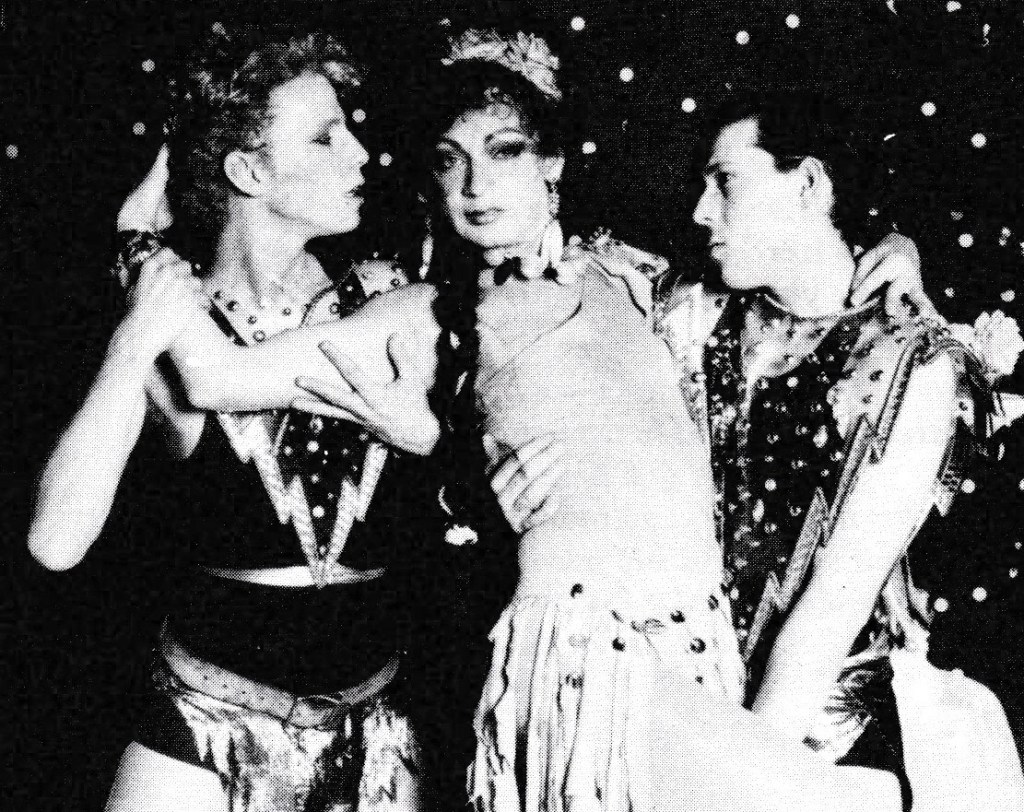
Q: You’ve done films, theater, cabaret – do you have any preferences? Is there one medium you feel more comfortable with at this point?
WOODLAWN: Oh God. I would really prefer to do movies.
Q: I keep hearing rumors that the producer Howard Rosenman wants to do a film of your autobiography.
WOODLAWN: Right. Actually, we’re negotiating right now with Columbia Pictures. The funny thing about it is, when Jeffrey and I wrote this book, we wrote it with a movie in mind.
Q: The overall shape of it is very cinematic.
WOODLAWN: And there’s a lot of dialogue. It’s also very Auntie Mameish – the book Little Me inspired me.
Q: The other rumor is that Madonna wants to be involved in the film. Have you spoken with her about it?
WOODLAWN: Yeah, when I did the video with her, Deeper and Deeper. She’s interested in doing Candy Darling.
Q: Was it talk or do you think it’s going to happen?
WOODLAWN: Right now it’s pretty much on paper – everybody’s just got to sign.
Q: Would you play yourself or would they want somebody to play you?
WOODLAWN: Well you see, the thing is once you sell your rights, honey, they can do anything. So that’s why I’m quibbling about little things now! The money, honey, at least. You know, Harvey Fierstein is the major force behind it. He read the book and just fell in love with it. He’s the one who took it to Howard. And he would write the screenplay too. What a coup, honey – Madonna and Fierstein!
(This interview first appeared in Brutarian No. 10, 1993.)
Link to:
Film: Interviews: Contents
For more on gender, see:
Film Essay: Gender Variance and Race
Film Review: Gun Hill Road
Film Review: Kokomo City
Film Review: Queeendom
Film Review: Seat 31
Film Review: Transamerica
Music: KALW Radio Show #5, Gender Variance in Western Music, part 1: Male-to-Female Representations
Music: KALW Radio Show #6, Gender Variance in Western Music, part 2: Female-to-Male Representations
Other Writings: Essay – “A Working Model of Gender”
For more on Candy Darling, see:
Other Writings: Book Review – Candy Darling
 NICOLE V. GAGNÉ