For Marco Bellocchio, there is only one true form of madness: the socially sanctioned insanity of everyday family life. His protagonists struggle against this suffocating, delusionary existence, and their painful journey toward freedom inevitably leads them into behavior that society labels crazy. Over the years, Bellocchio has described the battle of true madness against clinical madness, documenting real-life examples (Fit to Be Untied) and inventing his own case histories (Fists in the Pockets; Leap into the Void; The Eyes, The Mouth). He rarely works from pre-existing sources – the only other instance is his film of Chekhov’s The Seagull. But the story of Pirandello’s Henry IV seems tailor-made for his obsessive theme: For twenty years a man has been living in a remote Italian castle. Within those walls, the year is 1077 and he is the German Emperor Henry IV. One day his family arrives in the hope of curing him. What they don’t know is that Henry has been deliberately using his madness to keep them and their world out of his life. He has chosen his insanity and can put it on or take it off at will, unlike those who are trapped inside their invisible “ordinary madness.”
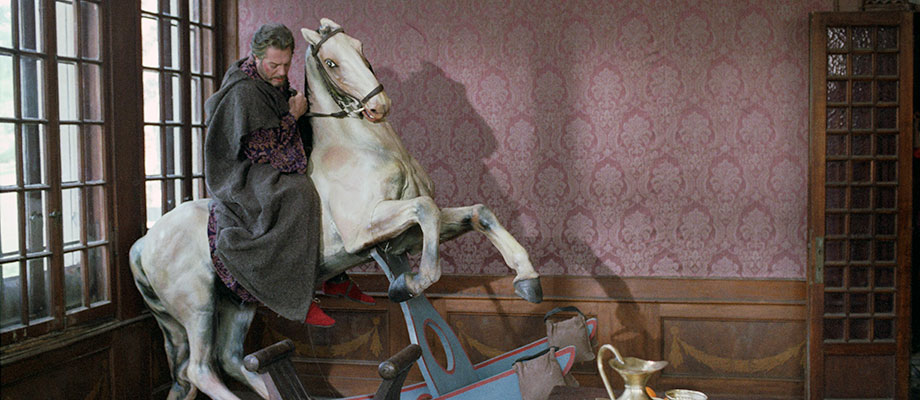
Marcello Mastroianni gives one of his strongest performances as Henry; his eyes and voice beautifully convey the weight of his long, self-imposed exile from the world. His star turn is ably supported by an excellent cast: Claudia Cardinale as Matilda, Henry’s great unrequited love; Paolo Bonacelli, the horrific Duc from Pasolini’s Salò, as the repellent fat cat who has become Matilda’s lover; and Leopoldo Trieste as a psychiatrist who may himself be a few bricks short of a load. Bellocchio and Tonino Guerra (the co-author of L’Avventura and Amarcord) effectively open up Pirandello’s play with flashbacks to the medieval-themed costume party at which the young Henry, after a head injury, first came to believe he was Henry IV. But their script keeps Bellocchio’s offbeat comic sense largely in check and restricts the film to a sedate, low-key mood. Bellocchio’s best work is more expressive and imaginative that Henry IV is, but this film is certain to fascinate and stimulate all who see it.
(This review first appeared in The Film Journal, July 1985.)
Link to:
Film: Reviews: Contents
For more on Marco Bellocchio, see:
Film Review: Devil in the Flesh
 NICOLE V. GAGNÉ