“Who’s shaking them up?”
When I had mentioned to a friend of mine that I found some of Branca’s Music for Bad Smells abrasive, she ingenuously asked me, “Isn’t he always like that?” That was the last thing I expected anyone to say; her question left me totally nonplussed. (Before I could regain my pluss, she suddenly said, “Oh, I’m sorry!” and after a tiny pause we both cracked up.) I’ve gotten so caught up in this music that I lose sight of how we’ve been conditioned to regard simply the idea of something being extremely loud. So the way some people approach Branca’s music can really surprise me. The Philadelphia premier of Symphony No. 5 was a doozy, with the management offering free cotton balls for your ears as you entered the hall.
Ordinarily, loudness is Topic A when discussing Branca. It’s actually a lousy place to begin, because it starts you off with a misunderstanding. What Branca’s driving at is that loudness itself is different from the way it’s been musically understood. Traditionally, it’s meant simply more of the same: the same music, only louder. Pitch, rhythm, timbre – changing those parameters meant changing the piece itself; the transformative effective volume was largely restricted to dramatic, extra-musical effects.
But Branca demonstrates that loudness isn’t more of the same. “The higher the volume, the longer the sound is maintained, the more the real character of the sound will become dominant, as a combination instead of separate tones.”[1] Sound changes as its volume increases. The perception of pitch and timbre is altered; the complex components of a single sound become more available, along with related phenomena such as resultant tones. Branca uses loudness for the same reason he uses the harmonic series: because he thinks it’s beautiful, and because it reveals that sound itself is far more complex and volatile than we normally recognize; that the stuff of music is far more lively and interesting than most musics understand or express.
The technology for creating extremes of volume is relatively new, and so its musical potential has only begun to be explored. This lack of familiarity has prompted some people to regard Branca’s loudness as merely a gimmick. But practically speaking, its gimmick potential is slim, because loudness is a finite commodity: After a certain point, you’ll hurt your audience. Exactly where that point of harm is, however, might not be as fixed as we’ve supposed. Just as Conlon Nancarrow’s Studies for Player Piano extend the limits of our perception of tempo, Branca’s music shows that we can safely – and meaningfully – listen to certain sounds at a much greater volume than we’ve ever experienced.
I’ve never felt that Branca’s amplification was hurting me, even though passages in the Symphonies Nos. 3 and 5 were louder than anything I’d ever heard. I remember listening to them and feeling amazed that I actually could be listening to them – and enjoying it too! Not only have I never felt harmed by it, but there’s also frequently (inevitably?) that moment when I thought, “Hey, I can take this – c’mon baby, let’s hear some REAL action.” And funnily enough, Branca usually complies.
I’ve spent evenings at clubs and gone home with my ears ringing, and I have no fondness for that at all. But Branca has never affected me that way. His music rarely stays at a peak volume for the bulk of a piece, and more importantly, it doesn’t rely upon sudden grating attacks or jarring shifts in registers – which is what you’re subjected to when ordinary music is absurdly cranked up. Branca says, “I saw a Ramones concert where my ears hurt, but I’ve never played a concert where anyone’s ears were in pain, and that’s not what I’m after if it did happen.”[2] The score of George Crumb’s Black Angels for electric string quartet stipulates a volume “at the threshold of pain,” but I don’t think Branca is about even that; he doesn’t want to hurt people, or threaten to hurt them.
And yet his loudness does threaten people. Any parameter taken to extremes represents a threat, because the artwork can start to breach conditioned attitudes and responses: Cage’s indeterminacy, Feldman’s quietness, Young’s scale, Partch’s corporeality, Ives’s simultaneities, Nancarrow’s tempi, Branca’s loudness. “If you’re confronted with something you have to deal with in a completely visceral way, you’re going to have a different response to it […] I’m not saying I can completely bypass the thinking process. But I think it’s possible to bypass some aspects of it, so that what happens in the subconscious can become more conscious.”[3] Digging where he digs, Branca has managed to hit a few nerves, and so some people feel threatened by his pieces. His extremism makes the music impossible to ignore – you either deal with it or leave the hall. If that’s an infringement on our freedom, the loss strikes me as no more pernicious than the requirement of sitting in darkness in order to see a film. (And on that big screen too – what fascist invented that artform, anyway?)
Loudness has another important quality for Branca: It pleases him. “The music is loud because I like loud music.”[4] Of course there will always be people who don’t like loud music; if the amplification isn’t to their taste, better they should walk out than sit there and feel abused. (They might however get a real hit from some of Branca’s records.) But audiences suckled on rock concerts and discos have no difficulty coping with his music’s volume. Which is not to say that they’re automatically Branca’s crowd – he has a dubious talent for creating scandals at any scene, from new-music festivals to rock clubs.
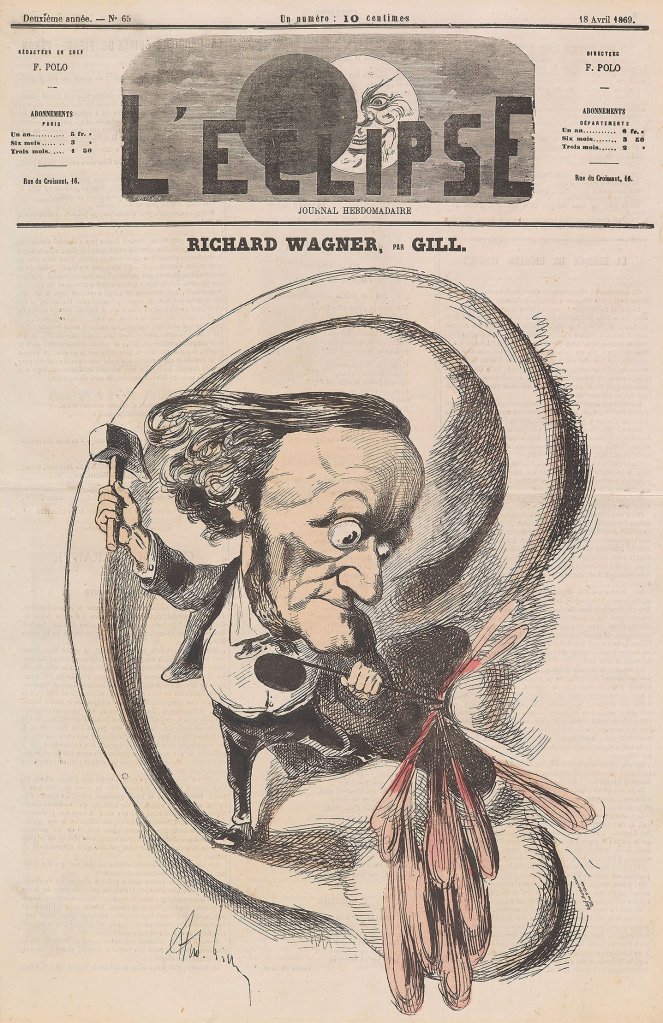
At a festival in Holland in 1983, someone was either snoozing or indulging an appetite for black comedy: A performance of Branca’s Symphony No. 4 was scheduled just before an orchestra was to play the Prelude and Liebestod from Tristan und Isolde. The musicians were apparently so rattled by Symphony No. 4 that their Wagner rapidly collapsed into silence. Alas, this atmosphere was not sustained, and some of the musicians felt compelled to denounce the experience that had preceded them. However, neither they nor the audience were reported to have thrown things at Branca and his ensemble. Such treatment is ordinarily reserved for prophets in their own land, and I’ll never forget watching that tradition being upheld one evening at an NYC club.
When Tracy Caras and I interviewed Morton Feldman for our book Soundpieces, he asked us something that never made it into the book: “Who’s shaking them up?” Well, we’ve hit paydirt. Of course, I’ve seen Branca received very warmly at clubs and new-music festivals. Nevertheless, he is the only artist I know who has repeatedly shaken up what should be his audience. The Residents, Frith, Tyranny, Zorn, Cage, Ashley, Sun Ra, Young, Feldman, Reich, Glass, Babbitt, Carter – they all know where to hang out a shingle for their music, and they can be pretty sure about who will show up and how they will respond. With Branca, it’s always a crap shoot. His music has developed to a point where it can go right past both the new-music crowd and the club-goers. Aesthetes are dismayed when the music becomes too visceral; rockers are pissed off that they can’t dance to it.
Although he straddles the worlds of rock and avant-garde concert music, Branca’s biggest problem isn’t nailing down an audience – they’re steadily finding each other, judging from the attendances I’ve seen. The bother is that neither circuit assures him of a space that can adequately convey his music. Clubs and new-music venues sprout up where it’s economically feasible to start giving concerts. Hold out for a location with good acoustics, and you’ll never find a space at all. So when Branca tours a piece, it can sound radically different from place to place.
Branca has his own love/hate relationship with these vicissitudes. They frustrate him because he wants his music to come off in a certain way, expressing specific structural patterns. The less a performance mirrors his concepts, the less it satisfies him, regardless of how much the audience may like it. He often can’t bring himself to go back onstage and acknowledge the extensive determined applause his music gets. That’s because he’s depressed and wants to hide, but how can an audience know that? You can’t blame anyone who thinks he’s being snobby or churlish. (Exhaustion can be a factor too. Even if a gig wasn’t preceded by long hours of traveling and/or rehearsal and/or sound checks, often after little or no sleep, there’s still the sheer effort of the performance itself – particularly Symphonies Nos. 4 and 5, which conclude with the emotional-structure finales that leave Branca drained and drenched, more like a prizefighter than a musician.) Branca has been doing his thing for so long, I wonder if he sufficiently appreciates the impact his music has on an audience – a major piece, even in a mediocre-sounding performance, is still an unprecedented experience for most listeners. That’s why the Philadelphia crowd at Symphony No. 5 responded with such heartfelt enthusiasm, so strong even I was surprised! And they’d heard only about 40% of what that music can do.
The other 60% of Symphony No. 5 was devoured by the Mandell Theater. It’s understandable that one of Branca’s dreams is to have a permanent space for performing his pieces, so he can be spared all these frustrations and concentrate solely on the music. But his real difficulty isn’t so much with space as with time: “I need a situation where I can have more time, where I can make sure that I’m going to give the audience something that I like, something that’ll be good […] You have to have a chance to work with the space a little bit, to see what works in the room – a one- or two-hour sound check is not enough time.” I don’t think there are many places where Branca’s music can’t sound. (BAM’s Carey Playhouse, where Branca performed Symphony No. 3, may be one of the few gruesome exceptions.) And when he gets a chance to work things out, it makes all the difference in the world. Then the love in the love/hate comes out: “If the sound on the stage is good, if the equipment is all right, if I know that the PA is OK and it’s going to sound good out there, if I can relax a little bit, then it can be an incredible experience.”
FOOTNOTES
1. Billy Bergman and Richard Horn, Recombinant Do Re Mi. New York: Quill, 1985, p. 35.
2. John Howell, “Glenn Branca” in Live, No. 6/7, 1982, pp. 8–9.
3. Craig Bromberg, “Glenn Branca” in East Village Eye, February 1984, p. 14.
4. Bromberg, “Glenn Branca,” p. 14.
Links to:
SONIC TRANSPORTS: Glenn Branca Essay, part 13
SONIC TRANSPORTS: Glenn Branca Contents
SONIC TRANSPORTS: Contents
For more on Glenn Branca, see:
Music Book: Historical Dictionary of Modern and Contemporary Classical Music, Second Edition
Music Book: Soundpieces 2: Interviews with American Composers
Music Lecture: The Secret of 20th-Century American Music
Music: KALW Radio Show #1, A Few of My Favorite Things…
Music: SFCR Radio Show #7, Postmodernism, part 4: Three Contemporary Masters
 NICOLE V. GAGNÉ